 Handetec
From 8 Hours to 30 Minutes: How a 200+ Store Fashion Chain Fixed Inventory Counting with Handetec RFID Handhelds
Here is the short version: a fashion and beauty retail chain with more than 200 stores across China cut a full store inventory count from 6–8 hours to under 30 minutes, using the Handetec C6100 RFID handheld terminal. Three months after rollout, inventory accuracy held at 99.9%, the shelf out-of-stock rate dropped from 15% to under 3%, shrinkage fell 70%, and average monthly revenue per store rose 12–18%.
This article does not pretend the deployment was flawless. It covers three things: where the customer was stuck, how we rolled out the system, and the problems we hit along the way.
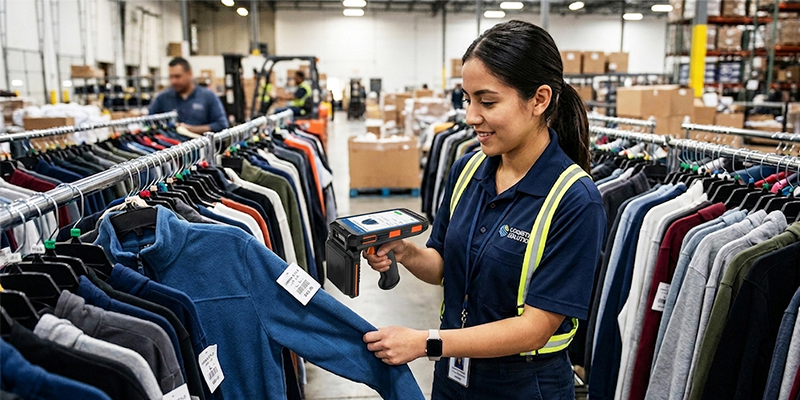
The customer: lots of SKUs, fast season changes, books that didn’t match the shelves
The client sells streetwear-style apparel, beauty products, and lifestyle accessories across more than 200 directly operated and franchised stores. Three things combined to create a familiar set of problems: a huge number of SKUs, frequent seasonal assortment changes, and small items mixed in with clothing.
- Counting ate up staff time. Store employees used barcode scanners item by item, and for small goods they often wrote counts down by hand. A full store count took 6–8 hours and usually meant overtime or closing the store. Even then, items were missed or double counted, and system stock rarely matched what was actually on the floor.
- Empty shelves and missing sizes were discovered late. Staff often did not notice until a customer asked, then had to run to the back room to check.
- Fitting rooms leaked stock. Clothes left in fitting rooms were not returned to the floor quickly, and small beauty items were almost impossible to guard with eyes alone. Shrinkage stayed high.
- Online and offline inventory were not one ledger. The e-commerce store kept taking orders the stores could not fulfill — the classic overselling problem.
Why handheld RFID instead of a big renovation
We initially discussed fixed readers, smart shelving, and reworking the store layout. The cost per store was high and installation took a long time — head office was never going to approve that. So we went the other way: keep the customer’s ERP and shelving untouched, and use handheld terminals, RFID tags, and an interface to get the counting right first. Counting is the foundation of every inventory problem. If the books do not match the shelves, talk of replenishment and loss prevention is just talk.
How the rollout worked
Three devices, each for a different job:
- The C6100 RFID handheld was the workhorse. It reads tags in batches and also scans barcodes. A staff member walks along the shelves and the device picks up every tag in range. The operating logic is close to a barcode scanner, so new staff were productive after half a day of training.
- The C6200 is lighter with longer battery life, built for fragmented tasks: floor walks, checking clothes in fitting rooms, and counting small beauty and accessory items.
- The H3000 stayed in the back room for barcode verification of off-season items that were not tagged.
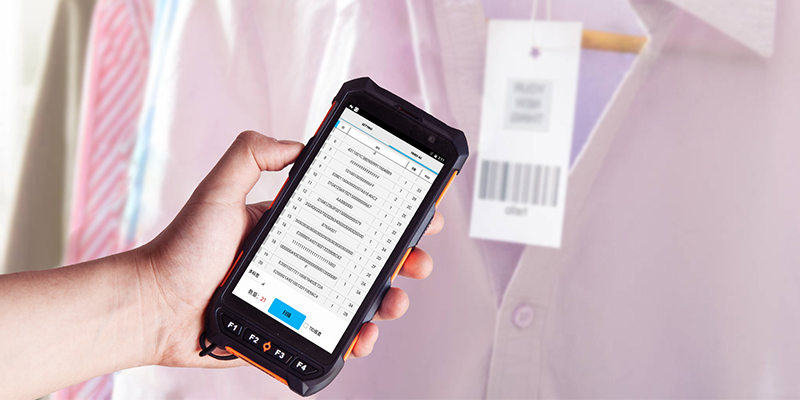
The tags were flexible UHF RFID labels designed for retail. They fit into garment hang tags, beauty boxes, and accessory packaging without changing the look, and they can be rewritten.
The process has four steps:
- Tagging at receiving. When goods arrived, staff wrote SKU, color, size, and price into each tag in batches. Every item got a digital identity, so data entry errors were stopped at the source.
- Fast counting. Staff walked the floor and the warehouse with the C6100, and the device read automatically. A full store count went from 6–8 hours to under 30 minutes.
- Replenishment alerts. The terminal compared shelf display against system data in real time. Empty shelves and missing sizes triggered alerts, so staff checked the screen before running to the back room.
- Loss prevention. Fitting room checks and exit alarms were linked. Unpaid items leaving the store triggered an alarm automatically.
Data synced in real time to the customer’s ERP and online store through an interface, supporting order online, ship from store, or pick up in store.
What actually went wrong
The system did not just work from day one. For the first two weeks, we worked through a few real problems with the customer.
First, staff did not trust it. Experienced employees were used to barcode scanners, and their complaint was reasonable: “With a scanner, I can see each item register. With this, I walk past and I’m supposed to believe it read everything?” Store managers used the devices themselves during fixed practice times each day, and within two weeks the complaints stopped.
Second, read range. The C6100 picked up tags from the shelves next to the one being counted, and the system showed hundreds of items that were not there. We shortened the read range and set a fixed walking route for counts. Problem solved.
Third, tag cost. Flexible tags are not expensive individually, but across 200+ stores the total adds up. We agreed with the customer to tag only current-season items and keep barcodes for off-season stock. That cut the tag budget by nearly half.
These details sound small, but they decide whether a project actually works.
Results after three months
| Metric | Before | After |
|---|---|---|
| Full store count time | 6–8 hours | Under 30 minutes |
| Inventory accuracy | Books often did not match shelves | 99.9% |
| Shelf out-of-stock rate | 15% | Under 3% |
| Labor cost per store | Not tracked separately | Down 60% |
| Store shrinkage | Not tracked separately | Down 70% |
| Slow-moving inventory | Not tracked separately | Down about 35% |
| Average monthly revenue per store | Not tracked separately | Up 12–18% |
Who this fits
This approach suits retail brands with many stores, complex SKUs, and online-offline operations — especially categories full of small items like apparel, footwear, beauty, and accessories. If you run three or four stores with simple SKUs, a barcode scanner is probably the smarter buy. RFID earns its keep at scale.
Three suggestions for anyone starting a similar project:
- Get counting right first. Add replenishment and loss prevention later. Do not try to do everything at once.
- Do not skimp on training. Good hardware is useless if store staff will not use it.
- Test the ERP integration with your software vendor early. Do not wait for launch day.
About Handetec
Handetec designs and manufactures industrial handheld terminals and RFID devices, covering barcode scanning, RFID reading/writing, and biometrics, for retail, logistics, warehousing, and asset management. If you would like to know whether the C6100 fits your stores, talk to our sales team. A one-week trial unit costs less than a single closed-store inventory count.
You May Also Like
-


Breaking the 10-Million Daily Parcel Bottleneck: How a Global Logistics Giant Achieved a 30% Efficiency Leap with Smart Handheld Scanners
16RFID textile industry, yarn spindle tracking, smart textile manufacturing, RFID yarn bobbin management, Handetec RFID solution, textile quality traceability.
Read More -
Bidding Farewell to “3-Day Inventories”: How a Large Auto Parts Warehouse Achieved Zero-Error Outbound and 2-Hour Rapid Inventory with RFID Readers
12Discover how Handheld-Wireless UHF RFID handheld terminals and anti-metal tags helped a large auto parts warehouse overcome metal interference. Streamline WMS integration and reduce inventory time from 3 days to just 2 hours.
Read More -
Revolutionizing Event Management: The Power of RFID Ticketing and Verification
16Eliminate long queues and fake tickets with Handetec's RFID event solutions. Discover long-range PDAs, smart badges, and real-time crowd tracking for seamless exhibitions.
Read More -
Textile Industry Manufacturing Management
27Learn how Handheld-Wireless biometric terminals (Face + Fingerprint) help a major construction group enforce real-name management. Stop buddy punching, integrate seamlessly with payroll systems, and ensure 100% site safety compliance.
Read More


 English