 Handetec
Beyond Barcodes: How RFID is Revolutionizing Airport Baggage & Cargo Tracking
As global air travel continues to expand, efficient baggage and cargo handling has become a critical factor in airport operations and passenger satisfaction. Annually, billions of luggage pieces are processed worldwide, yet mishandling, delays, and lost baggage continue to cost the aviation industry billions of dollars.
While traditional barcode systems are widely used, they face inherent limitations: short scanning distances, line-of-sight dependency, and low reading efficiency during peak hours. To overcome these challenges—and to comply with strict industry mandates like IATA Resolution 753—airlines and airports are rapidly adopting RFID (Radio Frequency Identification) technology as the ultimate next-generation solution.
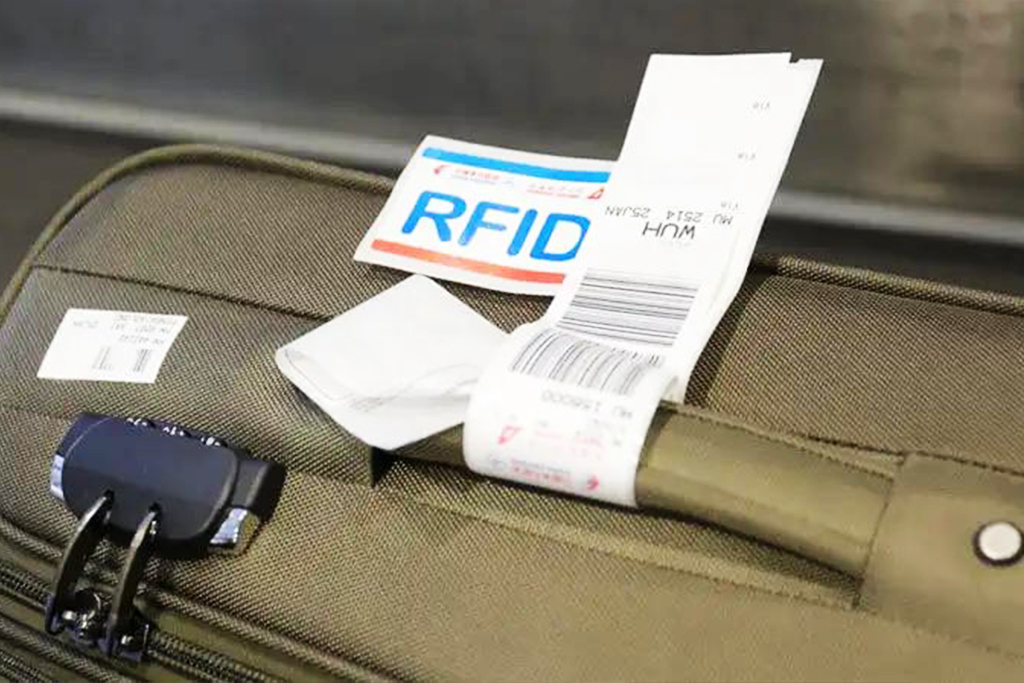
Why UHF RFID is Transforming Aviation Logistics
Compared to traditional barcodes, UHF RFID tags offer unmatched, aviation-grade advantages for both security and logistics:
- 📡 Long-Range Bulk Reading: Scans hundreds of tags simultaneously within several meters without line-of-sight, significantly boosting throughput at conveyor belts and loading gates.
- 🛡️ Extreme Durability: Resistant to dirt, moisture, and extreme temperature fluctuations—ideal for harsh tarmac and cargo hold environments.
- 🔄 Dynamic Data Storage: Updates security status and location in real-time, turning each bag or parcel into a mobile data carrier.
- 🔐 Anti-Counterfeiting: Each RFID tag features a globally unique ID, ensuring data authenticity and preventing malicious tampering.
Application 1: Air Cargo Security & Tracking
The air freight process involves multiple stakeholders. RFID cargo tracking systems provide absolute end-to-end visibility.
- Tagging & Data Initialization: At cargo acceptance, each shipment or ULD (Unit Load Device) is equipped with an RFID tag linked to the Air Waybill (AWB). Essential details are instantly encoded.
- Automated Security Screening: When cargo enters screening zones, RFID gate readers automatically update its status. After X-ray or CT scans, results (cleared, pending, rejected) are instantly written into the tag’s memory.
- Intelligent Sorting & Warehousing: RFID-enabled sorting systems automatically route freight based on destination and security clearance. Handheld RFID scanners enable staff to conduct rapid inventory checks without manual unpacking.
- Seamless Aircraft Loading: Through fixed or handheld readers at the tarmac, every transfer point is recorded. This verifies the security status before loading, eliminating the risk of loading unchecked or misrouted cargo.
Application 2: Passenger Baggage Handling
For commercial airlines, RFID baggage tracking drastically improves the passenger experience and ensures compliance with IATA regulations.
- Smart Check-in Tagging: At the check-in counter, an RFID luggage tag is printed, embedding the flight number, destination, and passenger info into a microchip.
- Security Status Integration: Following background X-ray screening, inspection results are securely bound to the baggage’s RFID profile in the central database.
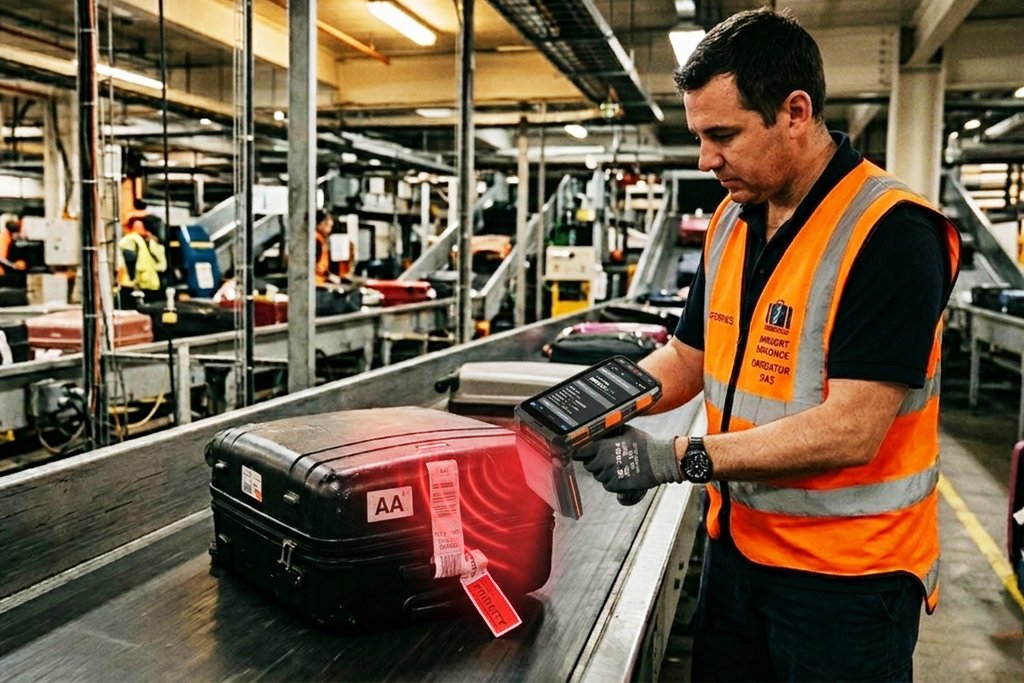
- Automated Sorting & Interception: Baggage sorting systems read destination and security status simultaneously. Suspicious luggage is automatically diverted, while staff use handheld terminals to quickly locate flagged bags among hundreds of others.
- End-to-End Passenger Visibility: Similar to tracking a parcel, passengers can monitor their luggage status via mobile apps (e.g., “Checked-in,” “Cleared Security,” “Loaded”). This transparency significantly reduces passenger anxiety and improves airline ratings.
Upgrade Your Airport Operations Today
Implementing an RFID airport baggage and cargo management system is no longer just an option—it is an industry standard. It eradicates manual errors, prevents security oversights, accelerates workflow, and optimizes resource allocation.
You May Also Like
-


Biometric Handheld Terminals: Building an Identity Security Barrier in the Mobile Era
211Upgrade your mobile KYC and e-government projects with Handheld-al biometric terminals. Featuring FBI-certified fingerprint and facial recognition via 4G
Read More -
Smart RFID Pet Vaccination Management System: A Complete Tracking Solution
202Looking for a reliable RFID pet tracking solution provider? Discover our implantable microchips, smart readers, and cloud software for vaccination management.
Read More -
The Next Competitive Advantage in Fashion Retail: Why RFID is Replacing Barcodes
28Discover how Handetec's RFID solutions (tags & PDAs) transform fashion retail. Improve inventory accuracy to 99%, reduce shrinkage, and see ROI in 5-12 months.
Read More -
How to Achieve “Instant” Asset Inventory from 20 Meters Away with UHF RFID Handheld Readers?
412Discover why standard tablets fail in warehouses. Learn how Handheld-al rugged tablets with UHF RFID & IP65 rating help reduce downtime and lower TCO.
Read More




 English